

The lab

Cultivator AI lab

Cultivator AI is an AI lab based in Eindhoven. We build agentic harnesses for companies, measure what they deliver and publish what we find.

What do we build?

Three things: a company's knowledge, structured so that every agent gets the right context; the harness that runs its processes with agents; and the factory that builds this for the next company faster than for the last.

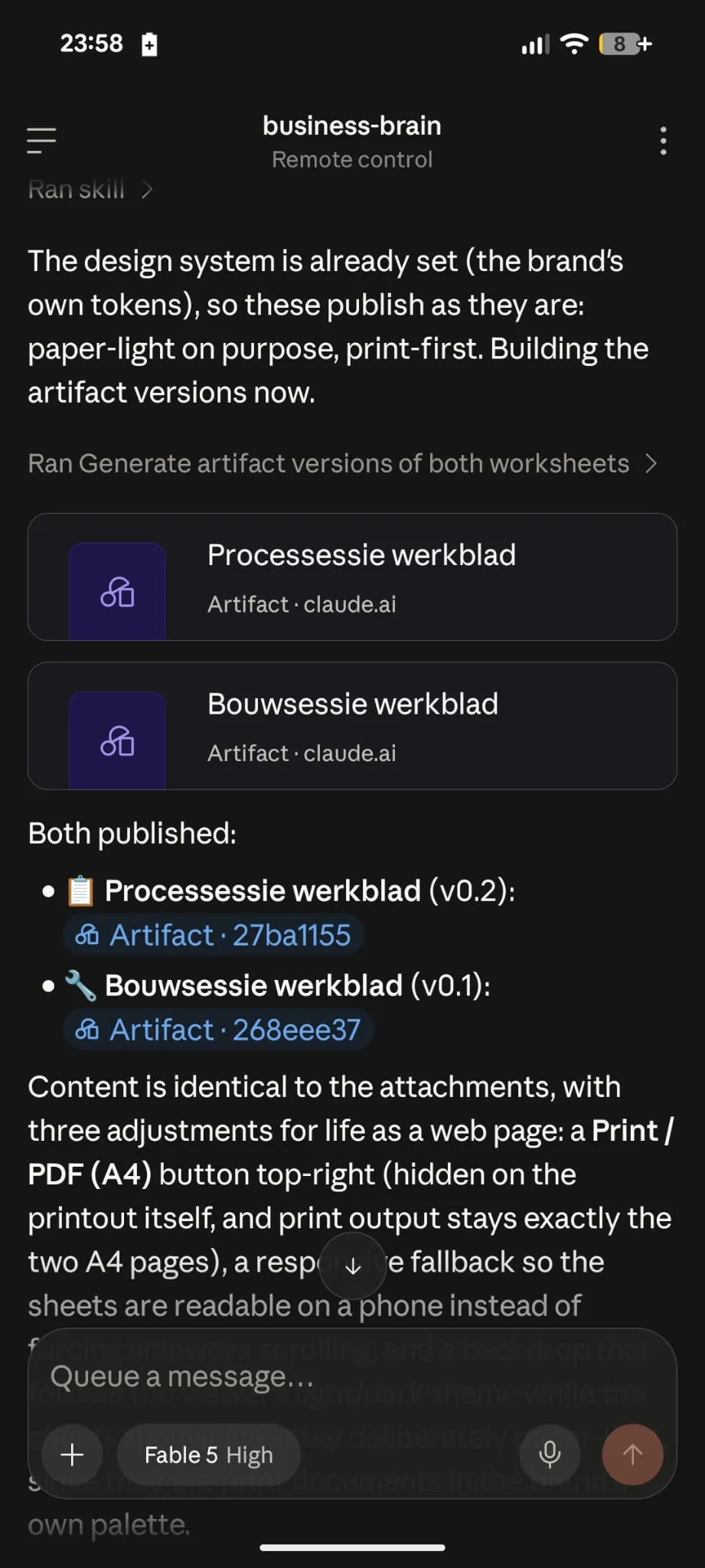
The company brain as a remote session on a phone: a question in, the documents out.
  • brain/
  • company/
  • overview.md
  • the-problem.md
  • brand.md
  • market/
  • icp.md
  • pricing.md
  • strategy/
  • roadmap.md
  • craft/
  • content.md
  • harness/

The company's knowledge.

Everything that now sits in heads, emails and spreadsheets, in one place. You send a note, a quote or a photo of the whiteboard to the brain and it lands where it belongs: who signs above a certain amount, which customer always gets priority, why that one quote is built differently. You ask for it back from your phone and get the answer with its source. What it delivers: new people are up to speed sooner, and the question that always sat with one person no longer costs half a day.

Company braineverything the company knowsHarnessYour peopleWorking environmentAgentsincludedFactoryYour systemsERP, documents, emailsovereign where it matters

The harness.

This is where it all comes together. A harness is the main interaction layer for steering agents: the system that runs your processes with agents. Central, so there is no sprawl of loose tools and agents. An order arrives as an email, the agent reads it and enters it in your ERP with process-specific knowledge attached, and your people decide where it matters, from their own working environment. It runs sovereign where it matters and you own it: if you stop working with us, it keeps running. Ours is called Trellis, and Cultivator AI itself runs on it today.

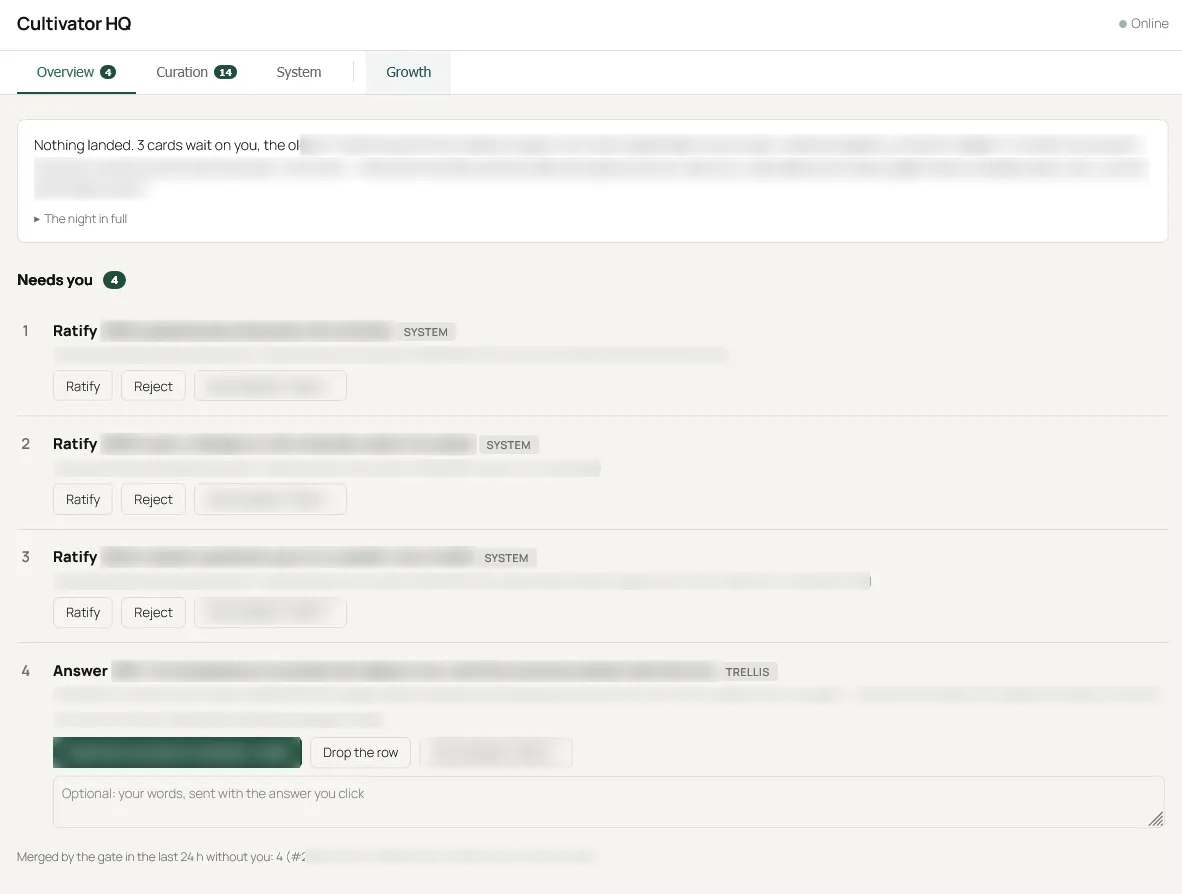
The decision screen of our own system: what needs a person today, with ratify and reject.
Trellis working environment, 25/10, Cultivator AI.

The factory.

The factory is what makes it fast. Every company needs its own harness, around its own processes. Built by hand this takes too many AI engineers, so we build a harness factory. The factory holds the knowledge of how to set up a harness robustly and how to connect the company brain, the agents and the data systems, so that work is not invented again for every company.

What a build looks like for you.

Three steps, for every build: elicitation, build, publish. At each step you see what it costs you and what it brings, in hours and in numbers you can check yourself.

  1. 01

    Elicitation.

    We sit with the people who do the work. They show how the process runs today: who decides, which rules apply, where the exceptions are. That becomes the list of what the agent needs, and a baseline: how many hours the process costs you now.

  2. 02

    Build.

    We build the agents for that one process, coupled to your systems, sovereign where it matters. Your people watch from their working environment and decide where it matters. Within thirty days it runs on your real work.

  3. 03

    Publish.

    We measure before and after: hours, lead time, error rate, the share handled without a person. You get the numbers with date and source, also when they disappoint, and decide whether the harness stays. What we learn goes on this page, without your name or figures unless you want them there.

What have we published?

Patterns we recognise in the market and in deep tech, next to what we measure in our own system.

  1. A forest path that splits in two, next to an empty sign.

    Essay

    Two routes for work with AI

    Companies that invest most in AI grow faster in headcount. The transition research describes, among others, two routes by which work gets organised differently: new companies take over, or existing companies transform. What each asks of a company, in plain words.

    Read the essay

  2. Our own DGX Spark on the side table, the computer we measure on.

    Coming soon

    The next measurement goes here.

    We publish it when it is measured, with date and source, not before.